Case study
Bent Beam Brewing
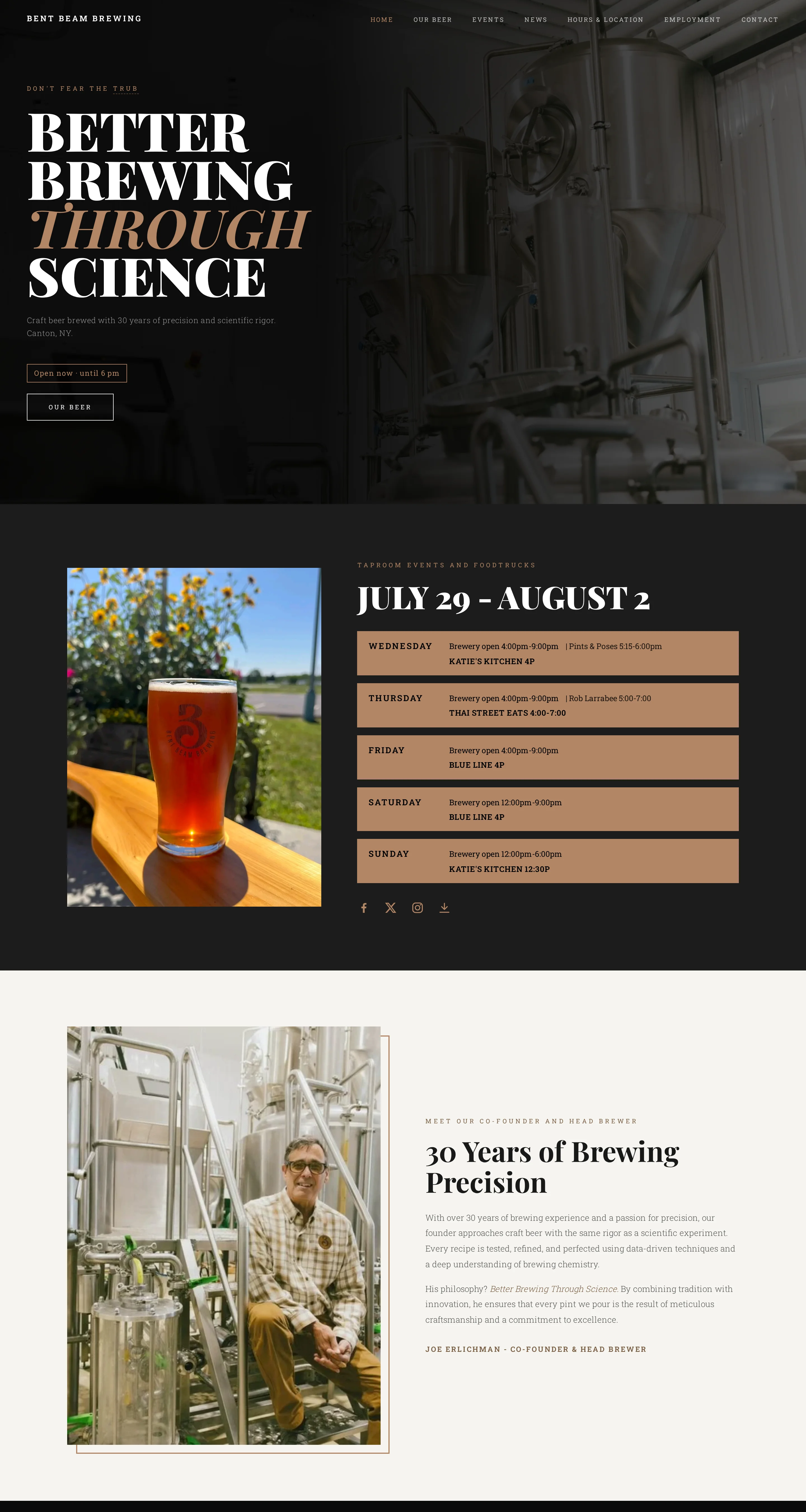
A taproom site the staff run themselves: what's pouring right now, who's playing this weekend, which food truck is parked outside. No developer in the loop.
- Sector
- Craft brewery and taproom
- Location
- Canton, NY
- Year
- 2026
- Live site
- bentbeambrewing.com →
The problem
A new brewery's information changes faster than anyone can email a web developer about it. The tap list turns over weekly, food trucks and live music get booked days ahead, and hiring happens in bursts. Anything that needed a developer in the middle would simply go stale - and a stale taproom page costs walk-in traffic on the exact night it matters. Alcohol sales carry a legal obligation to gate the site by age on top of all that.
The approach
Everything that changes often moved behind an editor the owners use from their phones. Everything that has to be right every single time - the age gate, form handling, the open or closed status - got pushed down into code that runs automatically, where nobody has to remember it.
What was built
- Age verification enforced at the edge before any page content is served, not by a script the visitor can skip
- A tap list the staff update themselves, with pour status, ABV, and tasting notes
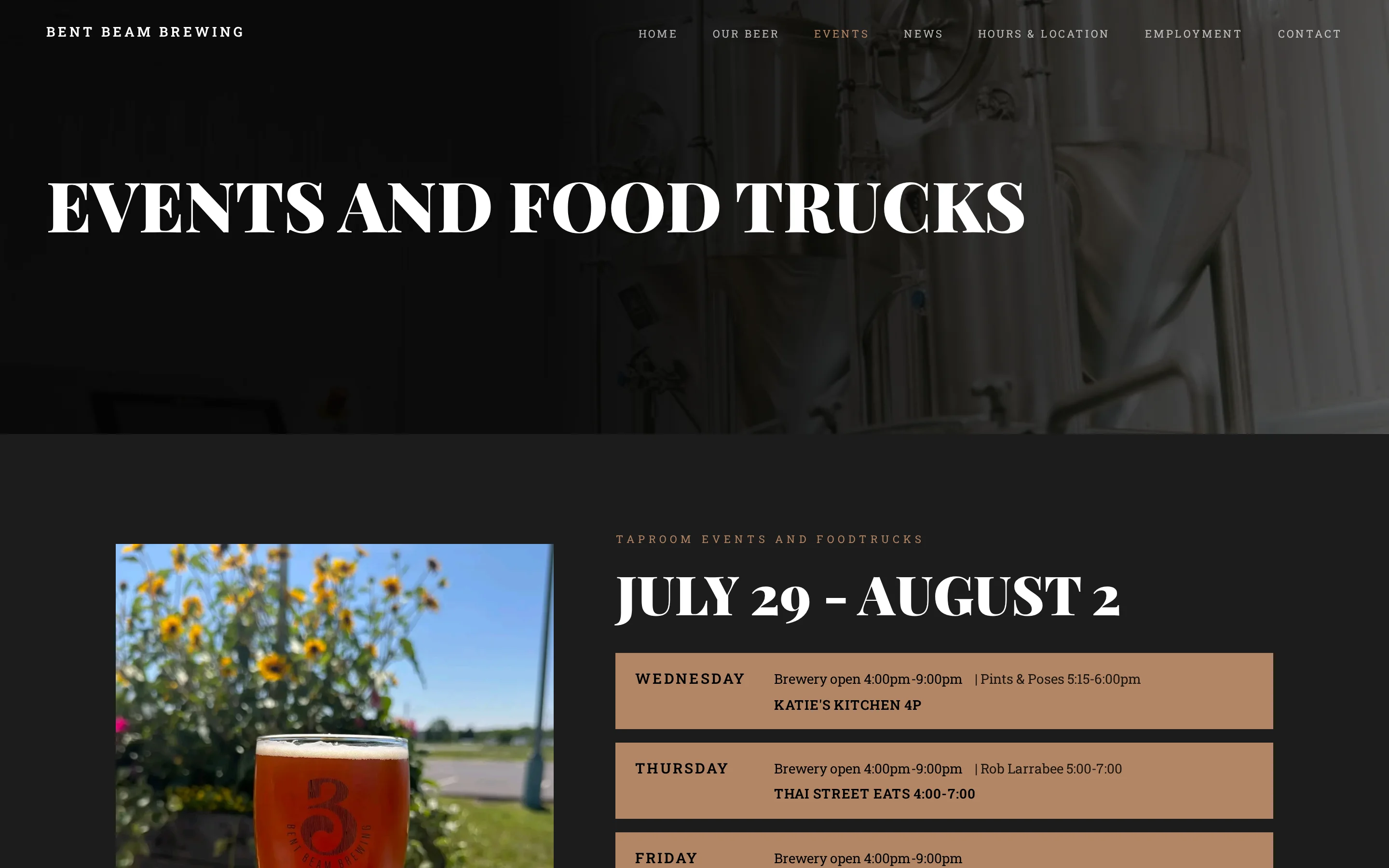
- Events and food-truck schedule, published from the same editor
- Hours-aware status that shows open or closed against the real schedule and time zone
- Job postings with an application form that accepts resume and cover-letter attachments
- Contact form with spam protection, delivered to email and to a private inbox
- Location map and directions
What makes it work
Details that mattered here
Staff-editable, developer-free
Tap list, events, hours, and posts are all edited through a browser. No developer, no support ticket, no waiting on someone else's week.
Legal age gate that can't be skipped
The gate runs before the page is delivered, so the content never reaches an unverified visitor in the first place. It isn't a pop-up you can click past.
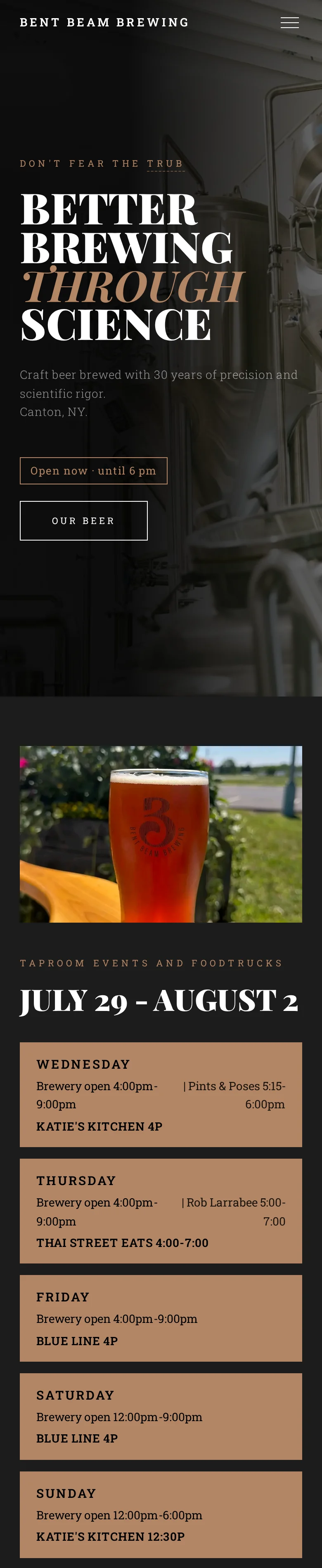
Built for a phone first
Most taproom traffic is somebody standing on the sidewalk deciding where to go. The layout is designed for exactly that moment.
Seven independent services
Age gate, tap list, events, contact, applications, mail handling, and scheduled jobs each run on their own, so one of them failing can't take the site down with it.
What they run without me
Everything below is edited by the client, in a browser, whenever they like. Each of those edits goes through the same checks as any change I make myself.
- The tap list - what's pouring, pour status, ABV, and tasting notes
- Events and the food-truck schedule
- Opening hours, which the open/closed status reads from automatically
- Job postings
- Blog posts and photographs
Where it landed
The owners publish a new tap list in under a minute from behind the bar. Every one of those changes still goes through the full accessibility, performance, and security check before a customer sees it.